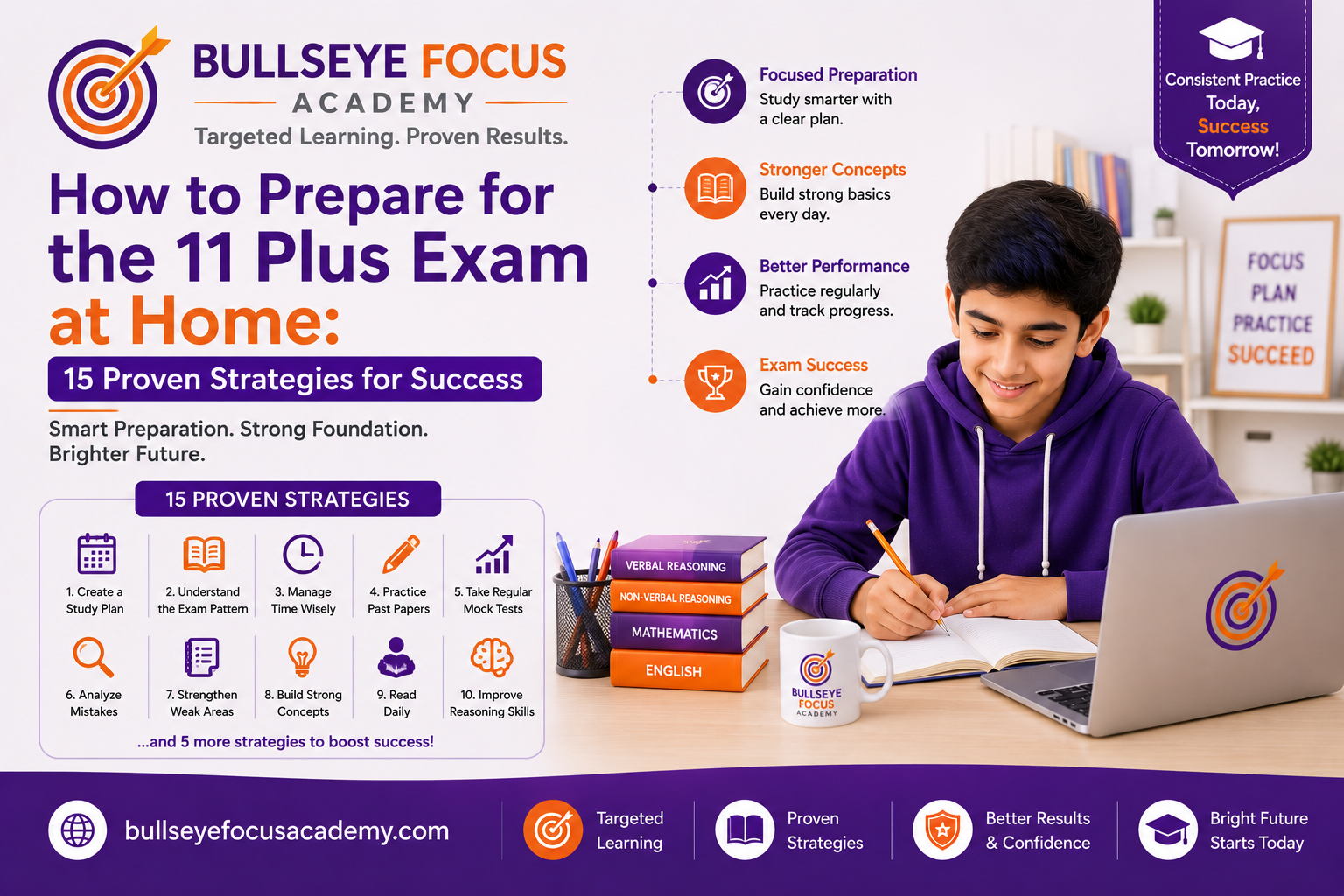
How to Prepare for the 11 Plus Exam at Home: 15 Proven Strategies for Success
Preparing for the 11 Plus exam can feel overwhelming for both parents and students. Many families wonder whether it is possible to achieve strong results without expensive tutoring or intensive classroom programs. The good news is that effective 11 Plus Preparation can absolutely be done at home with the right strategy, consistency, and support.
Every year, thousands of parents search online for advice about preparing their child for grammar school entrance exams. Common questions include when preparation should start, how many hours children should study, whether mock exams are necessary, and what subjects require the most attention. These questions are important because the 11 Plus exam is highly competitive and often plays a significant role in grammar school admissions.
Successful 11 Plus Preparation is not simply about studying harder. It involves developing strong learning habits, building confidence, improving reasoning skills, and becoming familiar with exam conditions. Children who prepare in a structured and consistent way often feel more comfortable and perform better when the real examination arrives. Parents do not need to become teachers to help their children succeed. By creating a positive learning environment, encouraging regular practice, and following a clear study plan, families can support effective preparation from home.
For families looking for additional academic support, educational resources and preparation programmes can be explored at https://bullseyefocusacademy.com/ and learning materials are available through https://bullseyefocusacademy.com/shop/.
Why 11 Plus Preparation Is Important
The 11 Plus examination is designed to assess a child’s academic potential and readiness for selective education. Unlike standard school assessments, it often includes challenging reasoning questions and timed sections that require strong problem-solving skills. Many students are capable of answering questions correctly when given unlimited time. However, the pressure of working under exam conditions can make even strong students feel nervous. This is why structured 11 Plus Preparation is so valuable.
Benefits of effective preparation include:
- Improved confidence
- Better time management
- Stronger problem-solving abilities
- Enhanced reasoning skills
- Reduced exam anxiety
- Greater familiarity with exam formats
Preparation also helps children develop study habits that can benefit them throughout secondary school and beyond.
When Should 11 Plus Preparation Start?
One of the most common questions parents ask is when preparation should begin. There is no single answer because every child develops at a different pace. However, many education specialists recommend beginning structured 11 Plus Preparation between Year 4 and the start of Year 5.
Starting early provides several advantages:
- Less pressure close to the exam
- More time to strengthen weak areas
- Opportunity to build confidence gradually
- Better long-term retention of knowledge
Children who start preparation too late may feel rushed and stressed. Beginning early allows learning to take place in a calm and manageable way. Parents should remember that 11 plus preparation does not need to be intensive from the start. Early stages can focus on reading, vocabulary building, and developing reasoning skills before moving into more exam-specific practice.
Understanding the 11 Plus Exam Format
Before beginning a study plan, it is important to understand what the examination may include. The exact format varies between schools and examination providers, but many 11 Plus assessments contain:
- English
- Mathematics
- Verbal Reasoning
- Non-Verbal Reasoning
Some schools may place greater emphasis on particular subjects, while others use a broader assessment approach.
Official information about assessment frameworks can be found through the official GL Assessment website at https://www.gl-assessment.co.uk/.
Understanding the structure of the exam helps parents focus preparation on the most relevant skills.
Create a Structured Study Schedule
One of the most effective ways to improve 11 Plus Preparation is by creating a realistic study schedule. Children generally perform better when learning is consistent rather than intensive. Short, focused sessions are often more effective than occasional long study periods.
A simple schedule might include:
- Monday: English practice
- Tuesday: Maths revision
- Wednesday: Verbal reasoning
- Thursday: Non-verbal reasoning
- Friday: Vocabulary building
- Weekend: Practice paper or review session
The goal is to create a routine that becomes part of the child’s normal week. Consistency often produces better results than studying for long hours.
Strengthen English Skills
English plays a significant role in many 11 Plus examinations.
Students may be assessed on:
- Reading comprehension
- Vocabulary
- Grammar
- Spelling
- Writing skills
Parents can support English development by encouraging regular reading.
Useful reading materials include:
- Fiction books
- Newspapers
- Educational magazines
- Classic children’s literature
Reading regularly exposes children to new vocabulary and improves comprehension skills naturally. Vocabulary development is particularly important because many verbal reasoning questions rely on a strong understanding of language.
Improve Mathematical Understanding
Mathematics is another key component of 11 Plus Preparation.
Children should feel comfortable with topics such as:
- Addition and subtraction
- Multiplication and division
- Fractions
- Decimals
- Percentages
- Problem-solving
- Mental arithmetic
Parents can support learning by encouraging regular practice and discussing real-life mathematical situations.
For example:
- Calculating shopping totals
- Measuring ingredients while cooking
- Estimating travel times
Making mathematics part of everyday life helps children develop confidence and practical understanding.
Develop Verbal Reasoning Skills
Verbal reasoning questions assess a child’s ability to understand and work with language-based information.
These questions often involve:
- Word relationships
- Synonyms and antonyms
- Letter patterns
- Logical sequences
- Vocabulary understanding
Verbal reasoning can be challenging for students who have limited vocabulary exposure.
Ways to improve verbal reasoning include:
- Reading regularly
- Learning new words daily
- Playing word games
- Completing reasoning exercises
- Discussing meanings of unfamiliar words
Regular practice helps students become familiar with common question types.
Build Non-Verbal Reasoning Ability
Non-verbal reasoning focuses on patterns, shapes, and visual problem-solving.
Students may encounter questions involving:
- Shape sequences
- Rotations
- Reflections
- Spatial awareness
- Pattern recognition
Many children initially find non-verbal reasoning unfamiliar because it differs from traditional school subjects. Improvement usually comes through regular exposure and practice.
Parents can help by encouraging activities that develop visual thinking skills, such as:
- Puzzles
- Construction toys
- Pattern games
- Logic challenges
These activities strengthen the same skills assessed in many non-verbal reasoning questions.
Use Timed Practice Sessions
Knowledge alone is not enough for success in the 11 Plus Preparation. Students must also learn to work efficiently under time pressure.
Timed practice sessions help children:
- Improve speed
- Manage time effectively
- Develop exam confidence
- Reduce panic during assessments
Initially, children may struggle to complete papers within the allocated time. This is completely normal. With regular practice, most students gradually improve their speed and efficiency. Parents should encourage accuracy first and speed second. Once a child understands how to solve questions correctly, timing becomes easier to improve.
Build a Strong Vocabulary
A rich vocabulary benefits students across multiple sections of the11 Plus Preparation.
Children with strong vocabulary skills often perform better in:
- Reading comprehension
- Verbal reasoning
- English assessments
- Written communication
Simple ways to build vocabulary include:
- Reading daily
- Keeping a vocabulary notebook
- Learning a new word each day
- Using new words in conversation
- Exploring word origins and meanings
Vocabulary growth is gradual, which is why early preparation is beneficial.
Encourage Daily Reading Habits
Reading is one of the most powerful tools available during 11 Plus Preparation.
Students who read regularly often develop:
- Better comprehension
- Stronger vocabulary
- Improved concentration
- Enhanced critical thinking skills
Parents should encourage children to read materials they genuinely enjoy.
This may include:
- Adventure stories
- Historical fiction
- Science books
- Biographies
- Educational magazines
When reading becomes enjoyable rather than a chore, children are more likely to maintain the habit consistently.
Review Progress Regularly
Preparation is most effective when progress is monitored.
Parents should regularly review:
- Practice paper scores
- Areas of improvement
- Common mistakes
- Confidence levels
- Time management skills
Tracking progress helps students stay motivated because they can see how much they are improving. It also helps parents identify areas that require additional attention.
For families seeking additional guidance, preparation support and academic resources are available at:
- https://bullseyefocusacademy.com/
- https://bullseyefocusacademy.com/shop/
- https://bullseyefocusacademy.com/contact-us/
Effective 11 Plus Preparation is not about perfection. It is about consistent improvement over time. Students who practise regularly, build strong learning habits, and receive positive support often make significant progress as exam day approaches.
Take Regular Mock Exams
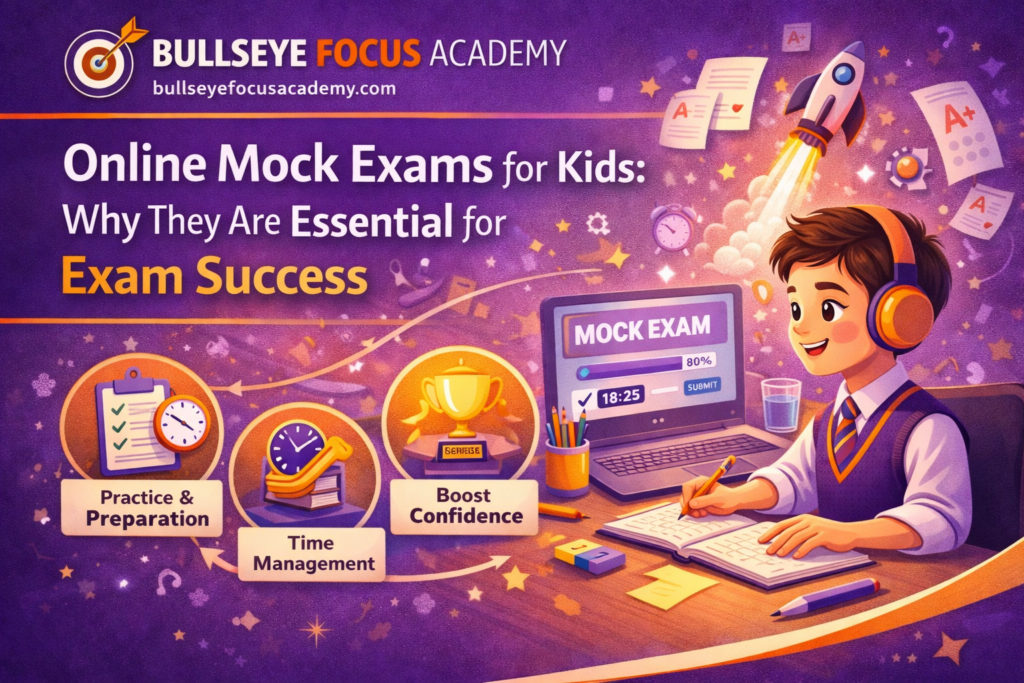
One of the most effective parts of 11 Plus Preparation is taking regular mock exams. Mock tests help students experience realistic exam conditions before the actual assessment.
Benefits of mock exams include:
- Improved confidence
- Better time management
- Reduced exam anxiety
- Familiarity with question formats
- Identification of weak areas
Mock exams should not be viewed as a way to measure intelligence. Instead, they should be used as learning tools that help students improve over time. Many students initially achieve lower scores in mock exams but make significant progress through consistent practice and review.
Learn From Mistakes
Taking practice papers alone is not enough. The greatest improvement often comes from reviewing mistakes carefully.
After completing a mock exam or practice paper, students should:
- Identify incorrect answers
- Understand why mistakes occurred
- Learn the correct methods
- Practise similar questions
- Track recurring errors
This process helps prevent the same mistakes from happening again. Parents should encourage children to view mistakes as opportunities to learn rather than failures.
Improve Time Management Skills
Time management is one of the most important skills assessed during the 11 Plus examination. Many capable students lose marks because they spend too much time on difficult questions.
Strategies for improving time management include:
- Practising under timed conditions
- Using a stopwatch during revision
- Learning when to move on from difficult questions
- Completing practice papers regularly
- Monitoring progress over time
As students become more familiar with exam formats, they often develop stronger timing strategies naturally.
Encourage Independent Learning
While parental support is important, children should also develop independent learning habits.
Independent learners often:
- Take greater responsibility for progress
- Develop stronger problem-solving skills
- Build confidence in their abilities
- Become more self-motivated
Parents can encourage independence by allowing children to:
- Organise study schedules
- Set learning goals
- Review mistakes independently
- Monitor their own progress
These skills remain valuable long after the 11 Plus examination has ended.
Reduce Exam Anxiety
Many students feel nervous about selective entrance examinations. A small amount of nervousness is normal and can even improve focus. However, excessive anxiety may negatively affect performance.
Ways to reduce exam stress include:
- Maintaining realistic expectations
- Taking regular breaks
- Following a balanced routine
- Practising relaxation techniques
- Encouraging positive thinking
- Using mock exams to build familiarity
Children often feel less anxious when they know what to expect on exam day.
Maintain Consistency Throughout Preparation
Consistency is often more important than intensity. Students who study for short periods regularly usually perform better than those who attempt to learn large amounts of information in occasional sessions.
Benefits of consistent preparation include:
- Better retention of knowledge
- Reduced stress
- Stronger study habits
- Improved confidence
- Steady progress
Parents should aim to create a sustainable routine that can be maintained over several months.
Track Progress and Celebrate Improvement
Tracking progress helps students stay motivated throughout 11 Plus Preparation.
Useful methods include:
- Recording mock exam scores
- Monitoring completion of study goals
- Tracking vocabulary growth
- Measuring improvements in timing
- Keeping a revision journal
Parents should celebrate effort and improvement rather than focusing exclusively on results. Recognising progress helps build confidence and encourages continued motivation.
Common 11 Plus Preparation Mistakes Parents Should Avoid
Even with good intentions, some preparation approaches can reduce effectiveness.
Starting Too Late
Last-minute preparation often increases stress and limits opportunities for improvement.
Focusing Only on Weak Subjects
Students should strengthen weaknesses while maintaining strengths.
Comparing Children
Every child develops at a different pace. Comparisons can reduce confidence and motivation.
Creating Excessive Pressure
Children generally perform better when they feel supported rather than pressured.
Ignoring Rest and Recreation
Balanced lifestyles support learning more effectively than constant study.
Overloading the Schedule
Too many activities can lead to fatigue and reduced concentration.
Avoiding these common mistakes helps create a healthier and more productive preparation experience.
How Mock Exams Improve 11 Plus Preparation
Mock exams are often considered one of the most valuable preparation tools available.
They provide:
- Realistic exam experience
- Performance feedback
- Time management practice
- Confidence building opportunities
- Progress measurement
Students who regularly complete mock exams often become more comfortable with exam conditions. This familiarity reduces uncertainty and helps students perform more confidently during the real assessment. Mock exams also reveal which topics require additional revision, making study plans more targeted and efficient.
The Psychological Benefits of Strong Preparation
11 Plus Preparation supports more than academic performance.
Students frequently experience important psychological benefits, including:
Increased Confidence
Preparation helps children feel more capable and ready for challenges.
Greater Resilience
Students learn to overcome mistakes and continue improving.
Improved Self-Discipline
Consistent study routines encourage responsibility and commitment.
Better Emotional Control
Familiarity with exam conditions often reduces anxiety and stress.
Positive Attitudes Towards Learning
Children who experience progress often become more motivated and engaged.
These benefits can continue supporting students throughout their educational journey.
How Parents Can Support Their Child Effectively
Parents play a crucial role in successful 11 Plus Preparation.
Helpful strategies include:
Create a Positive Study Environment
Provide a quiet and organised space for learning.
Encourage Consistency
Support regular study habits without creating excessive pressure.
Focus on Progress
Recognise effort, improvement, and commitment.
Maintain Open Communication
Allow children to discuss concerns and challenges.
Support Well-Being
Ensure children get sufficient sleep, exercise, and relaxation.
Keep Expectations Realistic
Every child has unique strengths and learning needs.
Supportive parenting often has a significant influence on confidence and motivation.
Using Online Resources Wisely
Modern technology offers many useful learning opportunities.
Students can benefit from:
- Educational websites
- Interactive learning platforms
- Practice question banks
- Vocabulary tools
- Online mock exams
However, screen time should remain balanced.
Online learning works best when combined with reading, written practice, and face-to-face discussion.
Families seeking structured learning support can explore:
https://bullseyefocusacademy.com/
Practice resources and preparation programmes can be found at:
https://bullseyefocusacademy.com/shop/
For personalised educational guidance, parents can visit:
https://bullseyefocusacademy.com/contact-us/
Preparing for Exam Day
The final weeks before the examination should focus on consolidation rather than intensive learning.
Students should:
- Continue regular revision
- Complete mock exams
- Review previous mistakes
- Maintain healthy routines
- Stay physically active
- Avoid excessive last-minute cramming
The goal is to enter the examination feeling confident, prepared, and calm.
Parents can help by maintaining a positive atmosphere and avoiding unnecessary pressure.
FAQs
What is 11 Plus Preparation?
11 Plus Preparation refers to the process of helping students develop the knowledge, skills, and confidence needed for grammar school entrance examinations. It typically includes English, Maths, Verbal Reasoning, Non-Verbal Reasoning, practice papers, and mock exams.
When should 11 Plus Preparation start?
Many students begin structured preparation during Year 4 or early Year 5. Starting early allows children to build skills gradually without excessive pressure and provides more time to strengthen weaker areas.
Can parents prepare a child for the 11 Plus exam at home?
Yes. Many families successfully manage 11 Plus Preparation at home using study schedules, practice papers, reading activities, and mock exams. Consistency and structured learning are often more important than expensive tutoring.
How important are mock exams?
Mock exams are extremely valuable because they help students experience realistic exam conditions, improve time management, reduce anxiety, and identify areas requiring additional revision.
How many hours should a child study for the 11 Plus?
The ideal amount varies by age and ability. Most experts recommend regular, focused study sessions rather than long periods of intensive revision. Consistency is generally more effective than studying for excessive hours.
What subjects are included in the 11 Plus exam?
Many 11 Plus examinations include English, mathematics, verbal reasoning, and non-verbal reasoning. The exact format varies between schools and examination providers.
Conclusion
11 Plus Preparation at home can be highly effective when approached with planning, consistency, and patience. Success is not determined by how many hours a child studies or how many resources they use. Instead, it comes from developing strong learning habits, building confidence, and gradually improving skills over time. Parents play an essential role by providing encouragement, structure, and emotional support throughout the preparation journey. With regular practice, realistic goals, effective revision strategies, and a positive learning environment, children can develop the skills needed to approach the examination confidently.
The most successful students are not always the ones who know the most. They are often the students who prepare consistently, learn from mistakes, manage their time effectively, and remain calm under pressure. Through thoughtful 11 Plus Preparation, families can help children build not only exam success but also valuable skills that support lifelong learning and academic achievement.