How Parents Can Help Their Child Pass the 11 Plus Exam
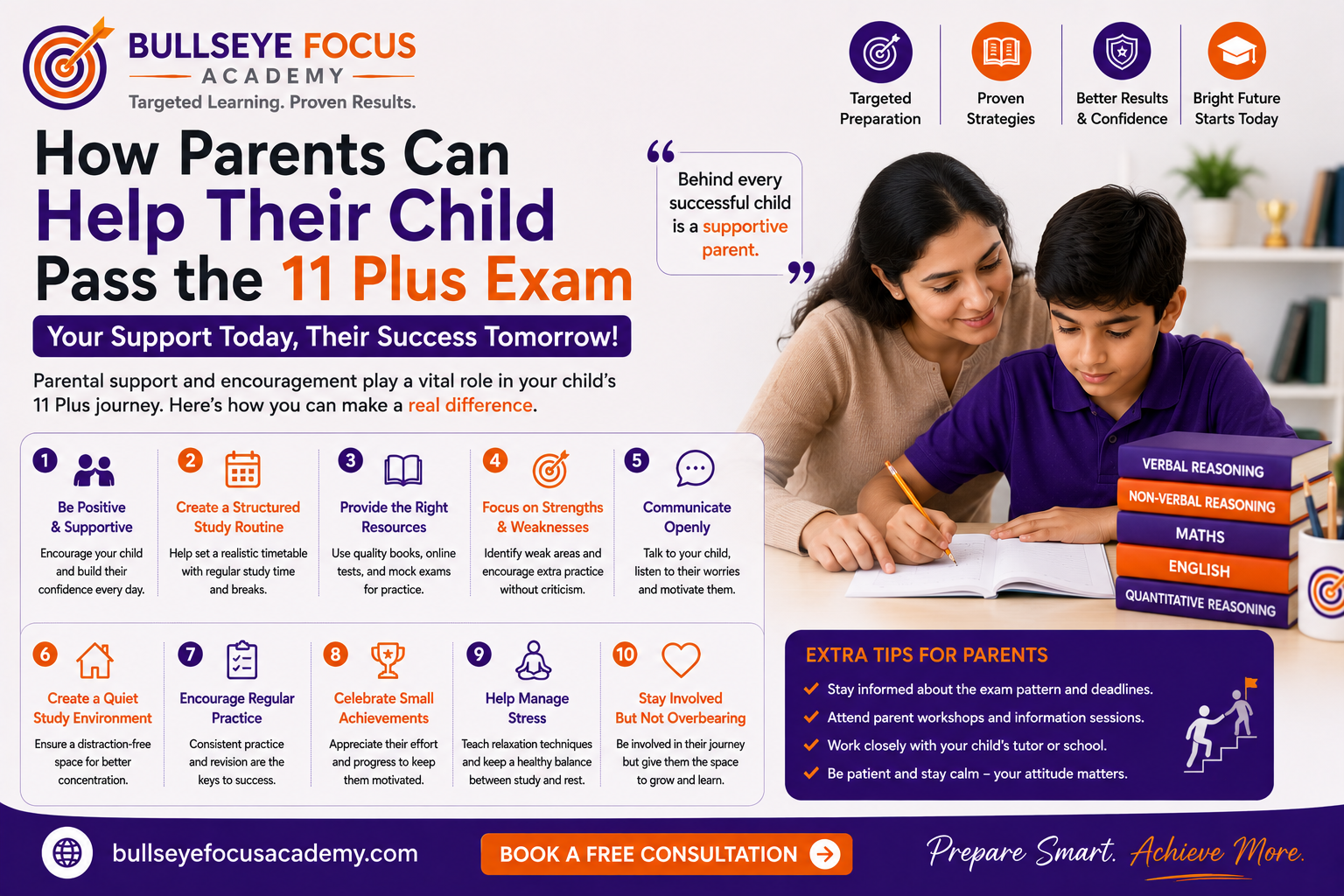
Preparing for the 11 Plus examination is an important journey for both children and their families. While students are responsible for learning the required subjects and developing exam skills, parents play an equally important role in creating the right environment for success. The support, encouragement, and guidance provided at home can make a significant difference to a child’s confidence, motivation, and overall performance. Following practical advice designed for 11 Plus Parents helps families prepare effectively without creating unnecessary stress.
The 11 Plus examination assesses a range of academic skills, including English, Mathematics, Verbal Reasoning, and Non-Verbal Reasoning. Success is rarely achieved through last-minute revision. Instead, children benefit from consistent preparation, regular reading, structured practice, and positive encouragement over several months.
Many parents feel unsure about how much support they should provide. Some worry about pushing their child too hard, while others are concerned they are not doing enough. The good news is that parents do not need to become teachers. By establishing healthy routines, encouraging consistent learning, and maintaining a positive attitude, they can give their child the best possible chance of success.
Why Parents Play a Key Role in 11 Plus Success
Children preparing for the 11 Plus often experience excitement, pressure, and uncertainty. Parents help create stability during this important period. Successful 11 Plus Parents provide more than academic support. They also encourage resilience, confidence, organization, and positive study habits.
Children are more likely to remain motivated when parents:
- Encourage regular revision.
- Celebrate small improvements.
- Provide emotional support.
- Maintain realistic expectations.
- Create healthy daily routines.
A calm and encouraging home environment allows children to focus on learning rather than worrying about results.
Understand the 11 Plus Exam Format
Before helping a child prepare, parents should understand what the examination includes.
Although requirements vary between schools, many 11 Plus examinations assess the following:
- English.
- Mathematics.
- Verbal Reasoning.
- Non-Verbal Reasoning.
Some schools may assess writing skills or use different combinations of subjects. Parents who understand the examination structure can create a balanced study plan that covers every important area.
For official information about educational assessments, parents can visit: https://www.gl-assessment.co.uk/
Create a Realistic Study Plan
One of the most valuable things 11 Plus Parents can do is establish a consistent study routine. Children usually learn more effectively through regular short sessions than occasional long revision days.
A weekly timetable might include:
Monday
- English reading.
- Vocabulary practice.
Tuesday
- Mathematics revision.
- Mental arithmetic.
Wednesday
- Verbal Reasoning exercises.
Thursday
- Non-Verbal Reasoning practice.
Friday
- Review weaker topics.
- Correct previous mistakes.
Saturday
- Timed practice paper.
Sunday
- Mock examination or light revision.
- Family activities and relaxation.
A structured routine reduces stress while helping children build confidence gradually.
Encourage Daily Reading
Reading is one of the most effective ways to improve overall 11 Plus performance.
Children who read regularly often develop the following:
- Better vocabulary.
- Stronger comprehension.
- Improved spelling.
- Better grammar.
- Greater concentration.
Successful 11 Plus Parents encourage children to read a variety of materials, including:
- Storybooks.
- Newspapers.
- Educational magazines.
- Non-fiction books.
- Children’s novels.
Parents should also discuss new words and ask simple comprehension questions to strengthen understanding.
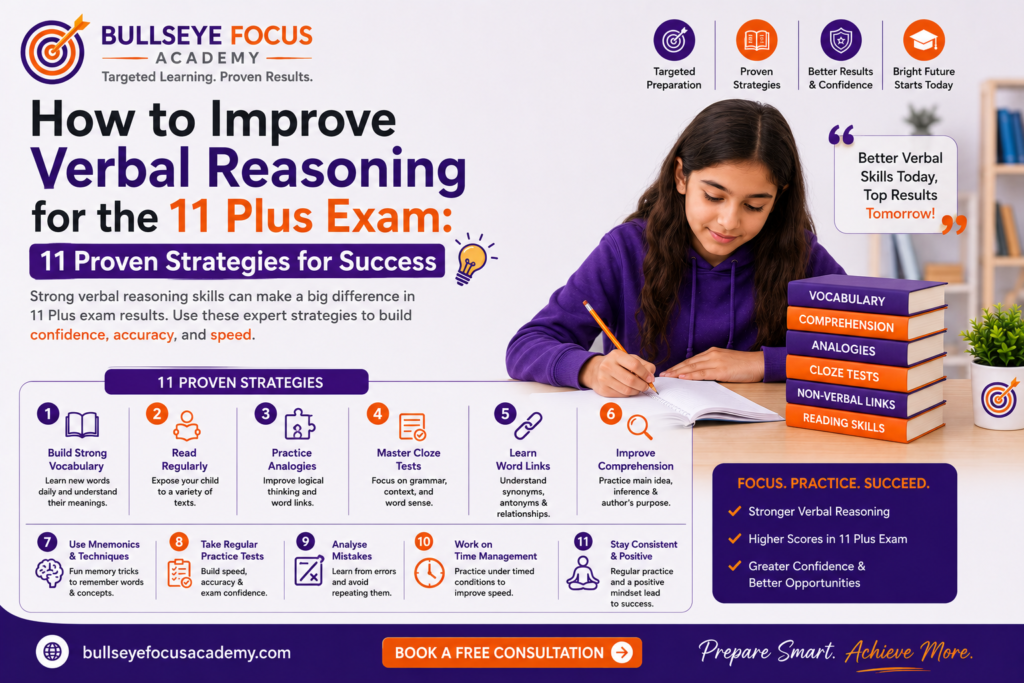
Build Strong Vocabulary Skills
Vocabulary supports several parts of the 11 Plus examination, particularly English and Verbal Reasoning.
Parents can help children expand their vocabulary by:
- Learning new words each week.
- Using flashcards.
- Playing word games.
- Discussing unfamiliar vocabulary.
- Encouraging dictionary use.
Learning vocabulary gradually is much more effective than trying to memorise hundreds of words shortly before the examination.
Support Mathematics Practice
Mathematics is another important area where parents can provide valuable support.
Children should practise:
- Addition.
- Subtraction.
- Multiplication.
- Division.
- Fractions.
- Decimals.
- Percentages.
- Word problems.
Parents do not always need to teach complex methods. Instead, they can encourage regular practice, discuss mistakes, and help children build confidence through repetition.
Include Verbal and Non-Verbal Reasoning
Reasoning skills often require dedicated preparation because many children have limited experience with these question types.
Students should regularly practice:
Verbal Reasoning
- Synonyms.
- Antonyms.
- Letter sequences.
- Codes.
- Word relationships.
Non-Verbal Reasoning
- Shape sequences.
- Rotations.
- Reflections.
- Symmetry.
- Pattern recognition.
Successful 11 Plus Parents ensure these areas receive equal attention alongside English and Mathematics.
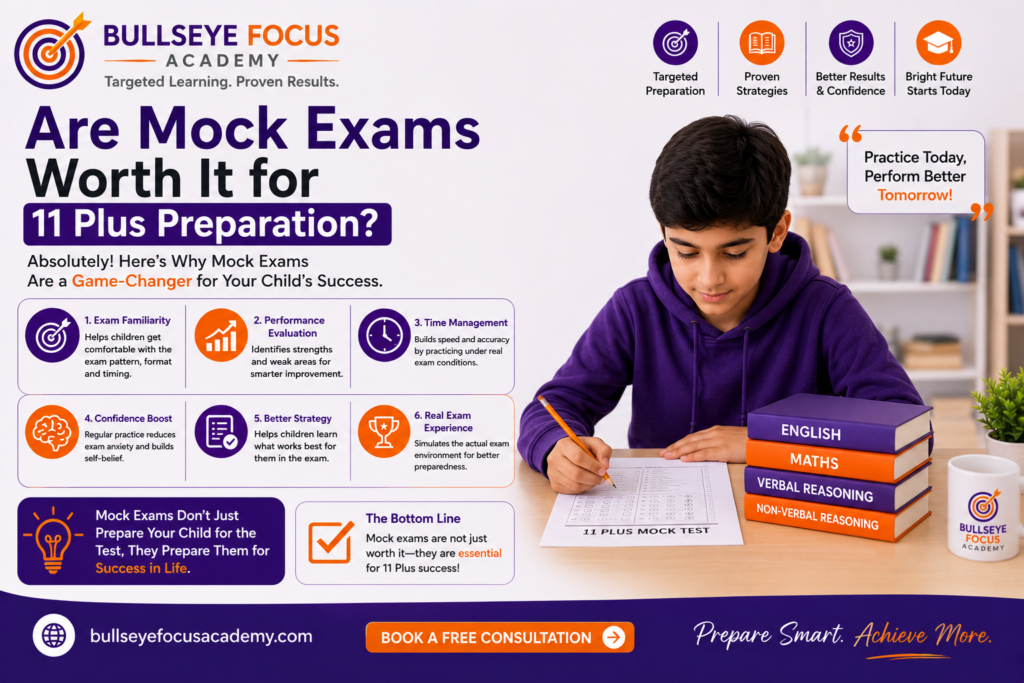
Use Mock Exams Effectively
Mock examinations are one of the best preparation tools available.
A realistic mock exam helps children:
- Experience exam conditions.
- Improve time management.
- Reduce nervousness.
- Identify weaker subjects.
- Build confidence.
However, mock exams should always be followed by detailed review.
Parents should discuss:
- Incorrect answers.
- Time management.
- Difficult question types.
- Areas requiring further revision.
The purpose of a mock examination is to improve future performance rather than simply produce a score.
Create a Positive Study Environment
The home learning environment has a significant influence on preparation.
Children usually concentrate better when they have the following:
- A quiet study area.
- Good lighting.
- Comfortable seating.
- Organized study materials.
- Limited distractions.
Successful 11 Plus Parents also establish regular study times so children know when revision will take place. Consistency helps create positive study habits that continue throughout preparation.
Help Your Child Develop Good Study Habits
Strong study habits are just as important as academic knowledge.
Parents can encourage children to:
- Complete homework carefully.
- Review mistakes regularly.
- Organize revision materials.
- Take short breaks.
- Ask questions when unsure.
Developing these habits helps children become more independent learners while reducing last-minute stress.
Encourage Questions and Curiosity
Children often hesitate to admit they do not understand something. Parents should create an environment where questions are welcomed.
When children feel comfortable asking for help, they are more likely to:
- Understand difficult concepts.
- Correct misunderstandings.
- Build confidence.
- Develop stronger problem-solving skills.
Positive communication strengthens both learning and motivation.
Balance Study with Relaxation
Although preparation is important, children also need time away from revision.
Successful 11 Plus Parents encourage balance through:
- Outdoor activities.
- Sports.
- Family time.
- Creative hobbies.
- Relaxation.
Regular breaks improve concentration, memory, and overall well-being. Parents who maintain healthy routines often find that children remain motivated throughout the preparation process.
For personalized preparation guidance, families can visit: https://bullseyefocusacademy.com/contact-us/
Help Your Child Manage Time Effectively
Time management is one of the most important examination skills children need to develop before sitting the 11 Plus exam. Many students know the correct answers but lose marks because they cannot complete every section within the time available.
Successful 11 Plus Parents encourage timed practice throughout preparation.
Children should learn to:
- Read instructions carefully.
- Keep an eye on the clock.
- Avoid spending too long on one question.
- Move on when necessary.
- Return to difficult questions if time allows.
Regular timed practice builds confidence and helps children work more efficiently under exam conditions.
Encourage Independent Learning
While parental support is valuable, children should gradually become responsible for their own learning.
Independent learners often develop:
- Better organization.
- Stronger problem-solving skills.
- Greater confidence.
- Improved decision-making.
- Increased motivation.
11 Plus Parents can encourage independence by allowing children to:
- Organize their revision timetable.
- Check completed work.
- Identify weaker topics.
- Set small weekly goals.
- Reflect on their own progress.
Developing these habits prepares children not only for the 11 Plus exam but also for future academic success.
Build Confidence Before the Exam
Confidence has a significant impact on examination performance. Children who believe in their abilities usually approach questions more calmly and think more clearly under pressure.
Parents can build confidence by:
- Praising effort rather than perfection.
- Celebrating improvements.
- Encouraging a positive attitude.
- Reminding children how much progress they have made.
- Avoiding negative comparisons with other students.
Positive encouragement helps children feel more prepared and less anxious.
Teach Healthy Exam Habits
Good preparation includes looking after both physical and mental well-being.
Successful 11 Plus Parents encourage healthy daily habits such as:
- Getting enough sleep.
- Eating balanced meals.
- Drinking plenty of water.
- Taking regular exercise.
- Limiting unnecessary screen time before study sessions.
Healthy routines improve concentration, memory, and overall performance.
Common Mistakes Parents Should Avoid
11 Plus Parents naturally want the best for their children, but some common mistakes can make preparation more stressful than necessary.
Creating Too Much Pressure
Children often perform better when they feel supported instead of pressured. 11 Plus Parents should encourage and reassure their children rather than constantly reminding them about the importance of the exam, as excessive pressure can increase anxiety and reduce confidence.
Comparing Children
Every child learns differently. 11 Plus Parents should avoid comparing their child’s progress with friends, classmates, or siblings. Instead, focus on personal improvement, individual achievements, and steady progress throughout the preparation journey.
Focusing Only on Scores
Mock examination scores are useful, but they should not become the only measure of success.
Parents should also recognize the following:
- Increased confidence.
- Better organization.
- Improved accuracy.
- Stronger concentration.
- Consistent effort.
Ignoring Mistakes
Every incorrect answer provides an opportunity to improve. Successful 11 Plus Parents encourage children to review mistakes carefully instead of moving quickly to the next practice paper.
Overloading the Study Schedule
Studying for many hours every day can lead to fatigue and reduced motivation. 11 Plus Parents should encourage shorter, regular revision sessions combined with adequate rest, as children usually achieve better results through balanced and consistent preparation rather than long hours of study.
Signs Your Child Is Ready for the Exam
Parents often ask how they can recognize when preparation is progressing well.
Positive signs include the following:
- Consistent mock exam performance.
- Greater confidence.
- Better time management.
- Improved vocabulary.
- Stronger reasoning skills.
- Calm attitude during timed practice.
- Increased independence.
These improvements usually develop gradually over several months.
Exam Day Tips for Parents
The day of the examination is just as important as the preparation leading up to it.
Helpful advice for 11 Plus parents includes the following:
- Ensure your child gets a good night’s sleep.
- Prepare everything the evening before.
- Allow plenty of time for travel.
- Provide a healthy breakfast.
- Stay calm and positive.
- Avoid last-minute intensive revision.
- Offer encouragement rather than pressure.
A relaxed start to the day helps children feel confident and focused.
Why Every Child’s Journey Is Different
No two children prepare in exactly the same way. Some students improve rapidly, while others make gradual progress over time.
Successful 11 Plus Parents understand that every child has the following:
- Different strengths.
- Different learning styles.
- Different confidence levels.
- Different rates of improvement.
The goal should always be helping each child achieve their personal best.
The Long-Term Benefits of Positive Parental Support
Supporting a child through the 11 Plus examination teaches valuable life skills beyond academic success.
Children often develop the following:
- Resilience.
- Self-confidence.
- Responsibility.
- Organization.
- Problem-solving skills.
- Independent learning habits.
These qualities continue to benefit students throughout secondary school and beyond.
Families looking for structured preparation and expert guidance can explore:
https://bullseyefocusacademy.com/
Practice materials and mock examinations are available at:
https://bullseyefocusacademy.com/shop/
Parents seeking personalized advice can contact:
https://bullseyefocusacademy.com/contact-us/
FAQs
How can parents help their child pass the 11 Plus exam?
11 Plus Parents can help by creating a structured study routine, encouraging daily reading, supporting mathematics and reasoning practice, using mock exams effectively, reviewing mistakes, and maintaining a calm, positive learning environment.
When should parents begin helping with 11 Plus preparation?
Most 11 Plus Parents begin structured preparation during Year 4 or early Year 5, depending on their child’s readiness. Starting gradually allows children to build confidence without feeling overwhelmed.
How often should children revise for the 11 Plus exam?
Successful 11 Plus Parents usually encourage short, consistent study sessions several times each week rather than occasional long revision periods. Regular practice helps improve understanding, confidence, and long-term memory.
Are mock exams important for 11 Plus preparation?
Yes. Mock examinations allow 11 Plus Parents to assess their child’s progress, improve time management, reduce exam anxiety, and identify subjects that require additional revision before the official examination.
What is the biggest mistake parents make during 11 Plus preparation?
One of the biggest mistakes 11 Plus Parents make is placing too much pressure on results instead of focusing on steady progress. Encouragement, patience, and balanced preparation usually lead to better long-term outcomes.
Conclusion
Preparing for the 11 Plus examination is a partnership between children and parents. While students are responsible for learning the required subjects, parents provide the guidance, encouragement, and stability that help children remain motivated throughout the preparation journey. By following practical strategies designed for 11 Plus Parents, families can create a positive environment where children develop confidence, strong study habits, and effective exam techniques.
Successful preparation is not about endless revision or constant pressure. Instead, 11 Plus Parents should focus on regular reading, structured practice, balanced routines, mock examinations, and learning from mistakes. 11 Plus Parents who celebrate progress, encourage independence, and maintain realistic expectations help children enjoy learning while steadily improving their performance.
Every child’s journey is unique, and success looks different for every family. With patience, consistent support, and the right approach, 11 Plus Parents can help their children approach the examination with confidence, perform to the best of their ability, and build valuable skills that continue to benefit them long after the 11 Plus exam has ended.