
Memory Improvement Techniques for Students: Why They Are Important
Memory improvement techniques for students are becoming increasingly important in modern education because children are expected to learn, understand, and remember large amounts of information in a short time. Many parents search for memory improvement techniques for students because children often forget lessons quickly, struggle during revision, or feel stressed before exams. Strong memory skills help students retain concepts for longer periods, recall information faster during exams, and improve confidence in academics. Without effective memory techniques, students may spend hours studying but still forget important topics during tests and assessments.
In today’s digital environment, students are constantly distracted by mobile phones, social media, games, and online entertainment. These distractions reduce concentration and negatively affect memory retention. This is why parents are increasingly focusing on improving their child’s learning habits and memory development from an early age.
Memory improvement techniques for students are not only useful for exams. They also support better focus, faster understanding, stronger analytical thinking, and long-term academic success. Students who develop strong memory skills become more confident, organized, and productive in their studies. Parents who encourage memory improvement techniques for students help children reduce academic stress and improve learning efficiency. These skills support both school performance and future educational success.
What Are Memory Improvement Techniques for Students and Why Parents Search for Them
Memory improvement techniques for students are learning methods and strategies that help children remember information more effectively and recall concepts easily during studies and exams.
Parents search for memory improvement techniques for students because they want to:
- Improve their child’s memory retention
- Help children remember lessons longer
- Reduce exam stress and forgetting
- Improve concentration during studies
- Increase confidence in exams
- Strengthen academic performance
Many children struggle not because they lack intelligence, but because they do not know how to learn and revise effectively. Strong memory techniques help students understand concepts deeply instead of simply memorising information temporarily.
To understand modern educational learning methods, parents can explore Pearson at https://www.pearson.com for educational resources and academic insights.
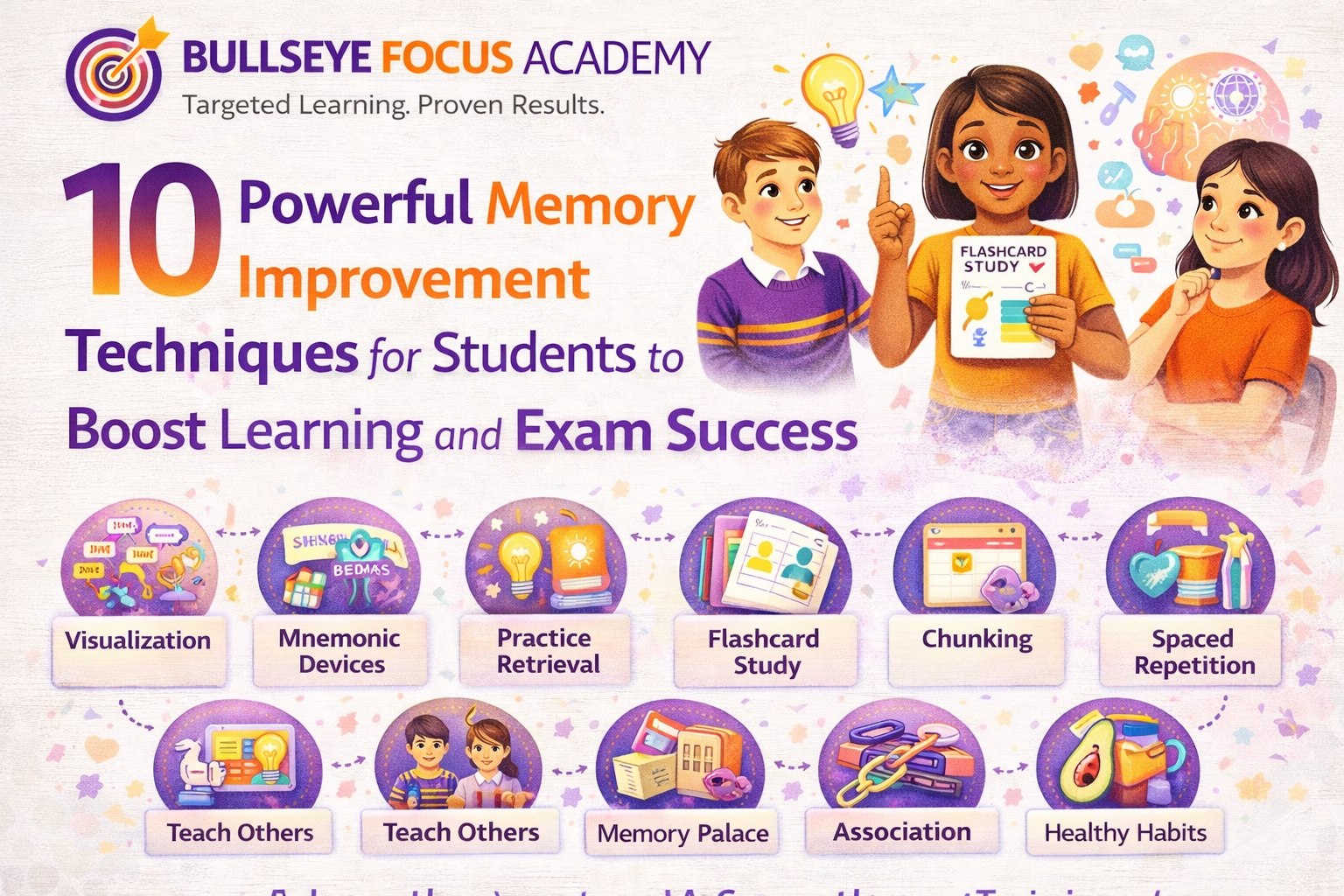
10 Powerful Memory Improvement Techniques for Students
1. Use Active Revision Methods
Students remember information better when they write notes, solve questions, and explain concepts instead of only reading textbooks.
2. Follow Regular Revision Cycles
Frequent revision strengthens long-term memory retention and prevents forgetting important topics.
3. Study in Short Sessions
Short study periods with breaks improve concentration and memory performance.
4. Create Mind Maps and Visual Notes
Visual learning techniques improve understanding and make concepts easier to remember.
5. Practice Mock Tests Regularly
Mock exams improve memory recall under pressure and strengthen exam confidence.
6. Maintain Proper Sleep Routine
Sleep plays a major role in memory development and information processing.
7. Reduce Mobile Phone Distractions
Less screen time improves focus and concentration during studies.
8. Teach Others What You Learn
Explaining topics to others improves understanding and memory retention.
9. Use Mnemonics and Memory Tricks
Memory shortcuts help students remember formulas, lists, and difficult concepts easily.
10. Maintain Healthy Nutrition and Hydration
A healthy body supports better brain function and memory performance.
Why Students Struggle With Memory and Concentration
Many students struggle with memory improvement techniques for students because of poor learning habits and modern distractions.
Lack of Proper Revision
Students often revise only before exams, which reduces long-term retention.
Excessive Screen Time
Mobile phones and games reduce focus and concentration levels.
Poor Sleep Habits
Lack of sleep affects memory processing and understanding.
Long Study Hours Without Breaks
Continuous studying without rest reduces productivity and memory retention.
Stress and Exam Anxiety
High stress levels negatively affect concentration and recall ability.
Understanding these challenges helps parents support children more effectively.
7 Effective Ways Parents Can Improve Memory Skills in Children
Parents play an important role in developing memory improvement techniques for students.
Encourage Daily Revision
Regular revision strengthens understanding and retention.
Create a Distraction-Free Study Environment
Quiet learning spaces improve concentration and focus.
Help Children Follow Study Timetables
Structured routines improve discipline and productivity.
Encourage Healthy Sleep and Nutrition
Healthy habits improve brain performance and memory.
Use Positive Motivation
Children perform better when encouraged instead of pressured.
Support Active Learning Techniques
Writing notes and discussing topics improve memory retention.
Limit Mobile and Screen Time
Reducing digital distractions improves learning efficiency.
Parents can explore structured academic support at https://bullseyefocusacademy.com/ and access learning resources at https://bullseyefocusacademy.com/shop/ to improve student learning and academic confidence.
How Memory Improvement Techniques Help During Exams
Memory improvement techniques for students are especially valuable during exam preparation. Students who follow proper revision strategies usually perform better and feel more confident during exams.
Strong memory skills help students:
- Recall concepts quickly
- Reduce exam stress and anxiety
- Improve answer accuracy
- Strengthen confidence during tests
- Improve revision efficiency
- Manage exam pressure effectively
Students who practice memory techniques consistently often perform better because they understand and retain concepts more effectively.
Students can also improve learning and revision skills through trusted educational resources such as https://www.khanacademy.org and https://www.bbc.com/bitesize, which provide interactive learning and revision materials.
Psychological Benefits of Memory Improvement Techniques for Students
Memory improvement techniques for students also support emotional well-being and confidence by reducing stress, improving recall ability, increasing exam readiness, and helping students feel more prepared, calm, and self-assured during studies.
Students experience:
- Increased self-confidence
- Reduced exam fear
- Better emotional balance
- Improved focus and discipline
- Higher motivation towards studies
When students feel more prepared and capable, they approach learning with a more positive mindset.
Common Mistakes Students Should Avoid
Even when trying to improve memory improvement techniques for students, poor habits like cramming, distractions, irregular revision, and lack of sleep can reduce focus, retention, and overall learning effectiveness significantly.
Studying Without Revision
Without regular revision, students quickly forget information.
Multitasking During Studies
Using mobile phones while studying reduces concentration.
Cramming Before Exams
Last-minute studying increases stress and weakens retention.
Ignoring Sleep and Health
Poor sleep negatively affects memory and brain function.
Passive Learning Habits
Only reading textbooks without active practice reduces understanding.
Avoiding these mistakes helps students improve learning and memory performance more effectively.
Importance of Memory Skills Beyond Academics
Memory improvement techniques for students are not useful only for school exams. These skills also support long-term personal and professional development.
Students with strong memory skills become the following:
- Better problem-solvers
- More confident learners
- Stronger communicators
- More productive and organised
- Better prepared for future careers
Strong memory development supports lifelong learning and decision-making abilities.
How One-to-One Learning Supports Memory Improvement
Personalized learning helps improve memory improvement techniques for students by providing individual attention, better understanding of concepts, focused revision, and customised learning methods that strengthen concentration, retention, and academic confidence effectively.
One-to-one support helps students:
- Receive individual attention
- Understand topics more clearly
- Revise difficult concepts effectively
- Improve concentration and confidence
- Build stronger academic foundations
Students who receive personalized academic guidance often improve faster because lessons are adapted to their individual learning styles and weak areas.
FAQs
1. What are memory improvement techniques for students?
Memory improvement techniques for students are study methods that help children remember information more effectively and improve concentration during learning. These techniques include regular revision, active learning, mind maps, note-making, and practice tests. They help students recall concepts easily during exams and improve overall academic performance, confidence, and long-term learning retention.
2. Why are memory skills important for students?
Memory skills are important because they help students understand, retain, and recall information more effectively during studies and exams. Strong memory improves revision, concentration, confidence, and academic performance. Students with better memory skills can learn faster, reduce exam stress, and perform more accurately in school assessments and competitive examinations over time.
3. How can parents improve memory skills in children?
Parents can improve memory skills by encouraging regular revision, creating distraction-free study environments, limiting screen time, and supporting healthy sleep habits. Positive motivation and structured study routines also improve concentration and retention. Helping children practise active learning methods such as note-making and discussions strengthens memory and academic confidence significantly.
4. Do memory techniques help reduce exam stress?
Yes, memory techniques help reduce exam stress because students feel more prepared and confident when they can remember concepts easily. Regular revision and effective learning strategies improve understanding and recall ability. This reduces last-minute panic, increases confidence during exams, and helps students manage academic pressure in a calmer and more organised way.
5. What are common memory mistakes students should avoid?
Students should avoid cramming before exams, multitasking during studies, excessive mobile phone use, poor sleep habits, and irregular revision schedules. These habits reduce concentration, understanding, and memory retention. Consistent revision, healthy routines, and focused learning are essential for improving memory skills and achieving better academic performance over time.
Conclusion
Memory improvement techniques for students are essential for academic success, confidence, and long-term learning development. Students who learn effective memory strategies can understand concepts more clearly, revise more efficiently, and perform better during exams. Strong memory skills also reduce stress and improve emotional confidence during academic challenges.
Parents who encourage memory improvement techniques for students help children build strong learning habits that support both school performance and future success. With proper guidance, regular revision, healthy routines, and consistent practice, students can improve memory retention, strengthen concentration, and achieve better academic results.