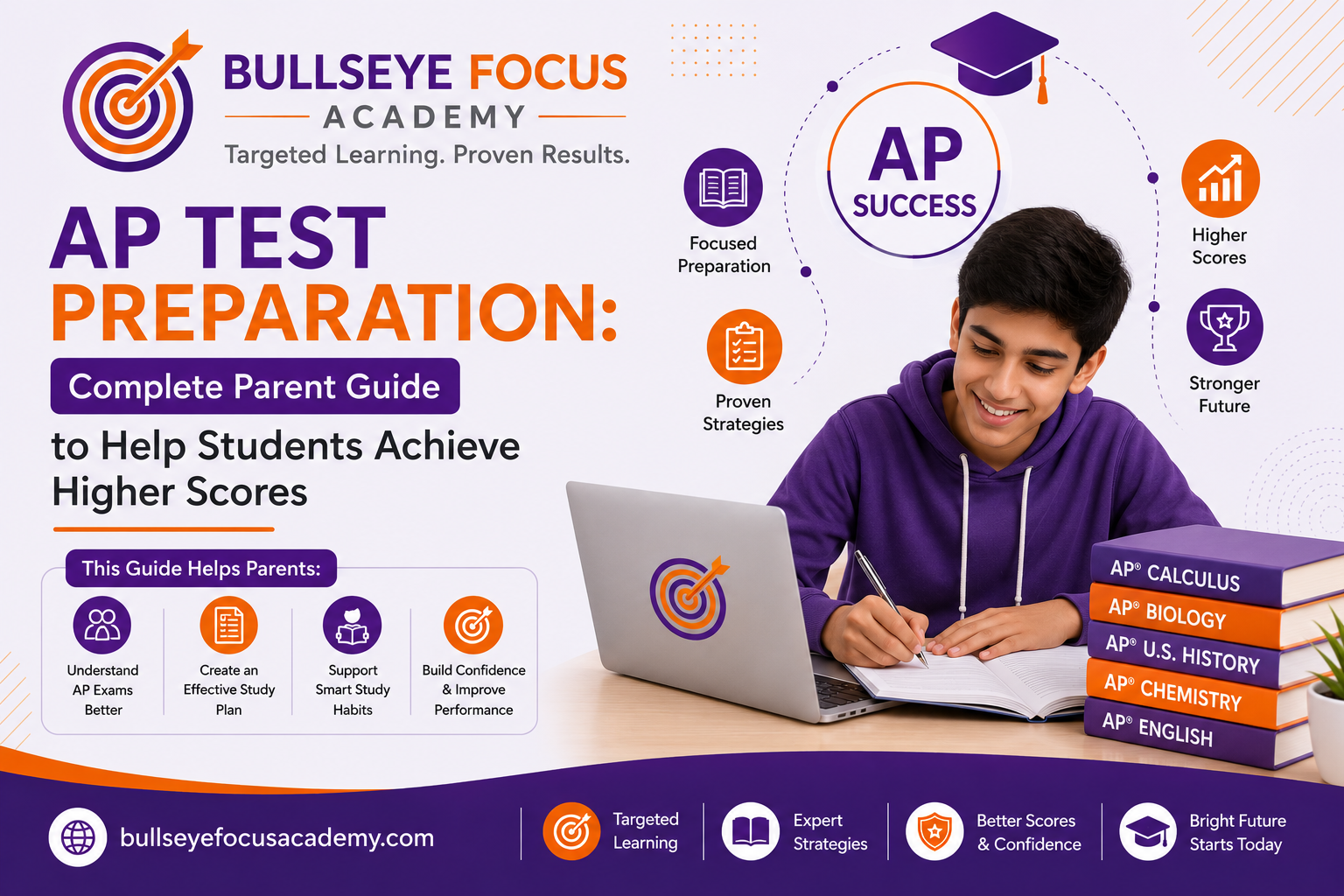
AP Test Preparation: Complete Parent Guide to Help Students Achieve Higher Scores
Advanced Placement (AP) exams are among the most recognized academic assessments for students planning to pursue higher education. Many parents search for AP Test Preparation because strong AP scores can strengthen university applications, demonstrate academic ability, and sometimes even earn college credit. AP exams are designed to challenge students with college-level content and analytical thinking. Unlike standard school tests, AP examinations require students to apply knowledge, evaluate information, and solve complex problems. This makes AP Test Preparation essential for students who want to achieve competitive scores.
Many students underestimate the difficulty of AP exams and begin revising too late. Without proper preparation, even academically strong students may struggle with time management, exam pressure, and advanced question formats. Effective preparation helps students develop confidence, improve subject understanding, and strengthen exam performance. Parents play a vital role by encouraging consistent study habits, providing emotional support, and helping students maintain a balanced routine. Strong AP Test Preparation not only improves exam results but also develops valuable skills that support future university success.
What Are Advanced Placement Exams?
AP exams are standardized assessments developed by the College Board. These exams measure a student’s mastery of college-level coursework in subjects such as mathematics, biology, chemistry, physics, English literature, psychology, history, economics, and computer science. Students take AP courses during secondary school and complete AP exams at the end of the academic year. High scores can strengthen university applications and may allow students to earn college credit depending on university policies.
Parents often focus on AP Test Preparation because these exams can help students:
- Strengthen university applications
- Demonstrate academic excellence
- Develop college-level study skills
- Build confidence in advanced subjects
- Improve critical thinking abilities
- Gain potential college credit
To learn more about AP programs, parents can visit https://apstudents.collegeboard.org/.
Benefits of AP Test Preparation
Students who prepare effectively often achieve stronger results and experience less exam stress.
Benefits include:
- Improved subject knowledge
- Better understanding of exam formats
- Increased confidence
- Stronger analytical thinking
- Enhanced time management
- Reduced exam anxiety
- Better academic discipline
Effective AP Test Preparation allows students to approach examinations with greater confidence and readiness.
12 Proven AP Test Preparation Strategies
Create a Long-Term Revision Plan: Students should begin preparation several months before exams. A structured plan ensures all topics receive adequate attention.
Understand the Exam Format: Each AP subject has specific question types and assessment criteria. Understanding the format improves confidence and performance.
Focus on Conceptual Understanding: AP exams often assess application and analysis rather than memorization alone.
Use Official Practice Questions: Practicing authentic AP questions helps students understand examiner expectations.
Complete Timed Practice Papers: Timed practice improves speed and prepares students for real exam conditions.
Review Mistakes Carefully: Analyzing errors helps students avoid repeating them during examinations.
Prioritise Weak Topics: Additional attention should be given to subjects or concepts that require improvement.
Use Active Recall Techniques: Flashcards, self-testing, and practice quizzes improve long-term retention.
Apply spaced revision: Reviewing material regularly over time improves memory and understanding.
Join Structured Learning Support: Guided learning can provide accountability and additional academic support.
Improve Note-Taking Skills: Clear revision notes help students organize information effectively.
Build Confidence Through Consistent Practice: Confidence develops naturally when students regularly apply their knowledge.
Common Challenges Students Face During AP Test Preparation
Many students encounter challenges during preparation.
Large Amounts of Content: AP courses often cover extensive material that requires careful planning.
Exam Pressure: Students may feel pressure due to university aspirations and academic expectations.
Poor Revision Habits: Ineffective study methods can reduce learning efficiency.
Time Constraints: Balancing AP subjects with other commitments can be challenging.
Lack of Confidence: Students sometimes underestimate their abilities despite being well prepared.
Recognizing these challenges early allows students to address them more effectively.
How Parents Can Support AP Test Preparation
Parents play an important role in creating a positive learning environment.
Parents can support students by:
- Encouraging consistent revision
- Creating a distraction-free study space
- Promoting healthy sleep habits
- Monitoring progress regularly
- Offering emotional encouragement
- Celebrating improvements and achievements
Students often perform better when they feel supported and motivated throughout the preparation process.
Importance of Practice Tests
Practice tests are one of the most effective tools in AP test preparation.
Benefits include:
- Improved familiarity with question styles
- Better time management
- Reduced exam anxiety
- Increased confidence
- Stronger problem-solving skills
Students who regularly complete practice tests often achieve higher scores because they become comfortable with exam expectations.
Internal Learning Support Resources
Students seeking structured academic support can explore the following:
These resources can complement AP Test Preparation by providing additional learning guidance, academic support, and revision opportunities.
Official AP Educational Resource
Students and parents can access the official AP program website at: https://apstudents.collegeboard.org/
This official resource provides accurate information about AP subjects, exam formats, registration details, scoring systems, study resources, and important updates. Using the official website alongside structured revision and practice can help support effective AP Test Preparation and improve exam readiness.
Psychological Benefits of AP Test Preparation
Strong preparation provides more than academic benefits.
Students often experience:
- Greater self-confidence
- Improved focus
- Reduced anxiety
- Better motivation
- Stronger resilience
These psychological benefits support both academic performance and personal development.
Common Mistakes Students Should Avoid
Leaving Revision Too Late: Last-minute preparation often increases stress and reduces effectiveness.
Ignoring Difficult Topics: Weak areas should be addressed rather than avoided.
Relying Only on Reading: Active revision methods generally produce stronger results.
Skipping Practice Tests: Exam familiarity is essential for confidence and performance.
Studying Without Breaks: Regular breaks improve concentration and retention.
Avoiding these mistakes can significantly improve exam readiness.
Long-Term Benefits of AP Test Preparation
Effective AP Test Preparation develops:
- Critical thinking
- Independent learning
- Time management
- Academic discipline
- Problem-solving skills
- Analytical reasoning
The skills developed through AP Test Preparation, including critical thinking, problem-solving, time management, and independent learning, provide long-term benefits. These abilities help students adapt to university-level coursework, manage academic responsibilities effectively, and build a strong foundation for future career growth and professional success.
FAQs
What is AP Test Preparation?
AP Test Preparation is a structured process that helps students build the knowledge, skills, and confidence needed to perform well in Advanced Placement exams. It typically includes reviewing course content, practicing exam-style questions, taking mock tests, improving time management, and learning effective test-taking strategies. A well-planned preparation approach helps students identify weak areas, strengthen understanding of key concepts, and maximize their chances of achieving higher AP exam scores.
When should students start preparing for AP exams?
Students should ideally begin preparing for AP exams several months before the test date. Starting early allows enough time to review all course material, strengthen weaker topics, and complete multiple practice tests without feeling rushed. Consistent study sessions over a longer period are generally more effective than last-minute cramming. Early preparation also helps students build confidence, reduce stress, and develop a deeper understanding of the subjects they are studying.
Are practice tests important?
Yes, practice tests are an essential part of AP exam preparation. They help students become familiar with the exam format, question styles, and timing requirements. Regular practice testing allows students to identify strengths and weaknesses, improve accuracy, and develop effective time-management skills. Additionally, practice exams help build confidence by simulating real testing conditions, enabling students to approach the actual AP exam with greater comfort, preparedness, and reduced anxiety.
How can parents support AP Test Preparation?
Parents can play a valuable role in supporting AP Test Preparation by encouraging consistent study habits and providing a positive learning environment. They can help students stay organized, monitor progress, and ensure access to appropriate study resources. Offering emotional support and maintaining realistic expectations can also reduce stress levels. By promoting balance between academics, rest, and extracurricular activities, parents can help students remain motivated and focused throughout the preparation process.
Can AP Test Preparation reduce exam stress?
Yes, effective AP Test Preparation can significantly reduce exam stress. When students are familiar with the exam structure and have practiced regularly, they tend to feel more confident and in control. Preparation helps eliminate uncertainty by improving subject knowledge, strengthening problem-solving abilities, and refining time-management skills. As students gain experience through revision and mock exams, anxiety often decreases, allowing them to approach the test with a calmer mindset and better performance potential.
Conclusion
AP Test Preparation plays a vital role in helping students achieve strong academic performance and reach their educational goals. A well-structured preparation plan allows students to review key concepts, strengthen subject knowledge, and develop effective exam techniques. Regular study sessions and focused revision help improve understanding and retention of important course material.
Consistent practice is equally important during AP Test Preparation. Completing practice questions and mock exams helps students become familiar with the exam format, improve time management, and identify areas that need additional attention. This process builds confidence and reduces uncertainty before the actual examination.
Parents can support student success by encouraging positive study habits and providing a productive learning environment. With the right resources, dedication, and preparation strategy, students can maximize their potential, achieve higher AP exam scores, and build a strong foundation for future university studies and academic success.