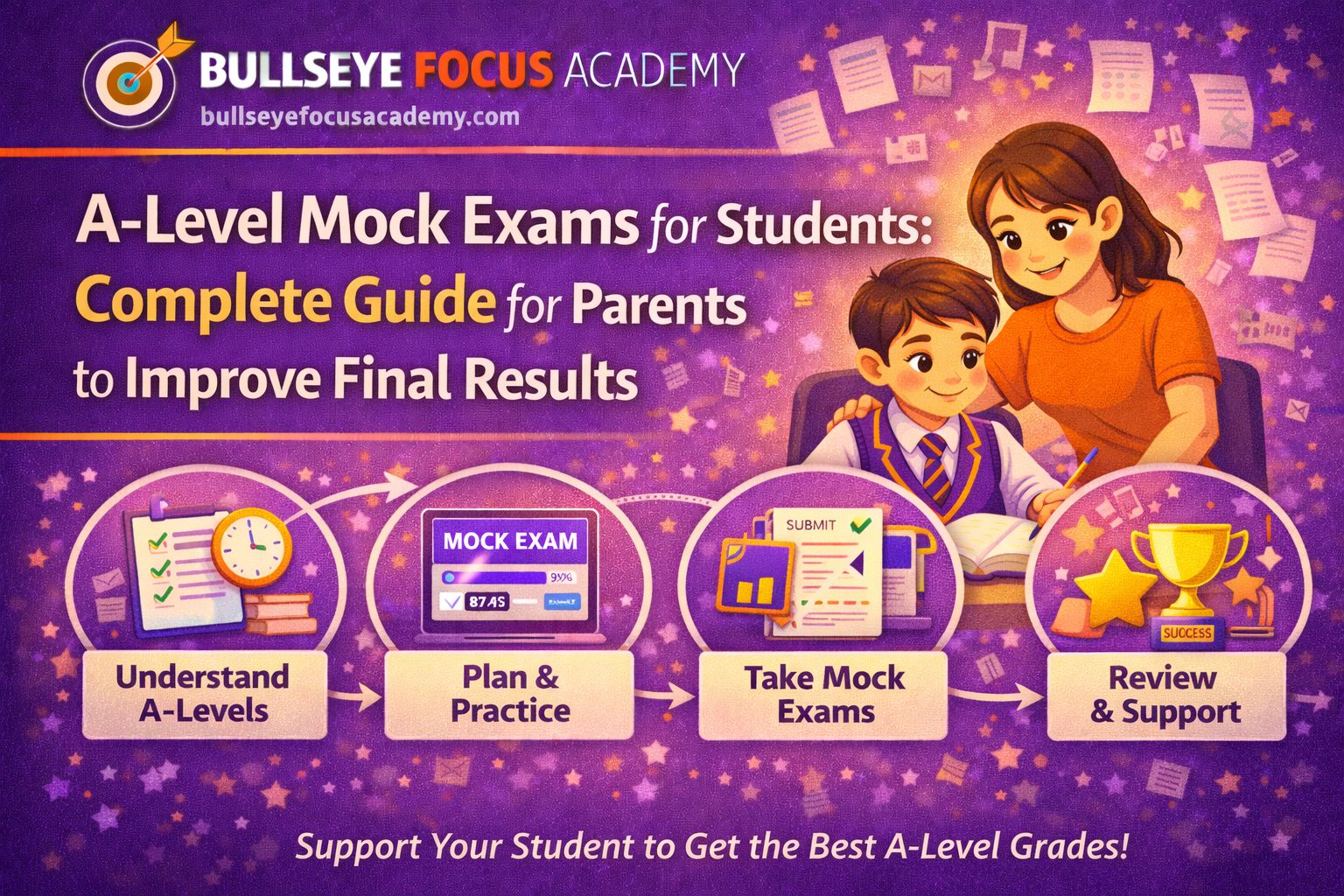
A-Level Mock Exams for Students: Complete Guide for Parents to Improve Final Results
A-Level Mock Exams for Students: Why They Are Important
A-Level mock exams for students are one of the most effective ways to prepare for final A-Level exams in the UK. Many parents search for A-Level mock exams for students because these exams give a realistic understanding of how their child will perform under actual exam conditions.
A-Level exams are more advanced and require deeper subject knowledge, critical thinking, and strong exam techniques. Without proper practice, students may struggle with time management and exam pressure, even if they understand the subject well.
When students regularly take A-Level mock exams for students, they improve their confidence, accuracy, and ability to manage time effectively. This preparation ensures they are fully ready to perform well in their final exams.
What Are A-Level Mock Exams and Why Parents Search for Them
A-Level mock exams for students are practice exams based on the official A-Level syllabus. These exams help assess a student’s readiness before the final exams and highlight areas that need improvement.
Parents search for A-Level mock exams for students because they want to:
- Track their child’s academic progress
- Identify weak subjects early
- Improve exam confidence
- Ensure better final exam results
To understand official exam structures and assessment criteria, parents can refer to AQA and explore https://www.aqa.org.uk, where detailed subject information and exam formats are available.
Benefits of A-Level Mock Exams for Students
Using A-Level mock exams for students regularly provides several benefits that directly impact performance.
- Improves time management during exams
- Builds confidence under pressure
- Helps students understand complex exam patterns
- Identifies strengths and weak areas
- Improves accuracy and reduces mistakes
Students who practise consistently feel more prepared and confident.
7 Effective Ways to Use A-Level Mock Exams for Students
Parents can support their child with these proven strategies:
- Start early preparation: Begin mock exams well before final exams
- Practice under real exam conditions: Follow strict timing
- Analyse results carefully: Focus on weak areas
- Encourage regular revision: Reinforces understanding
- Use multiple mock exams: Tracks progress over time
- Maintain consistency: Regular practice improves results
- Balance study and rest: Prevents burnout
For structured preparation and guided support, parents can explore https://bullseyefocusacademy.com/ and access mock exam programs at https://bullseyefocusacademy.com/shop/ to help their child prepare effectively.
How A-Level Mock Exams for Students Improve Performance
A-Level mock exams play a key role in turning preparation into real exam success.
- Real exam simulation: Students experience actual exam conditions
- Performance tracking: Helps measure improvement
- Better accuracy: Reduces careless mistakes
- Confidence boost: Students feel fully prepared
- Stress reduction: Familiarity reduces anxiety
Students can also strengthen their subject knowledge using trusted platforms like https://www.khanacademy.org for concept clarity and https://www.bbc.com/bitesize for A-Level revision support.
How Parents Can Support Their Child
Parents play an important role in making A-Level mock exams effective.
They can:
- Encourage consistent mock test practice
- Help create a structured study routine
- Provide emotional support
- Avoid unnecessary pressure
- Celebrate progress and achievements
A positive environment helps students stay motivated and focused.
FAQs
1. What are A-Level mock exams for students?
A-Level mock exams for students are practice tests that simulate real A-Level exam conditions.
2. How often should students take mock exams?
Students should take mock exams regularly, especially before final exams.
3. Do mock exams improve A-Level results?
Yes, they improve confidence, accuracy, and time management.
4. Are mock exams stressful?
They can be, but regular practice reduces stress over time.
5. Can students prepare for A-Level exams at home?
Yes, with proper guidance, structured study plans, and mock exams.
6. How can parents know if their child is improving after mock exams?
Parents can track improvement by reviewing scores, checking accuracy, and analysing mistakes after each test. Consistent progress in weaker areas and better time management are clear signs of improvement.
7. What should students do after completing a mock exam?
After finishing a test, students should carefully review incorrect answers, understand their mistakes, and revise those topics. This step is more important than just taking the test itself.
8. Are online mock exams as effective as offline exams?
Yes, online mock exams can be equally effective if taken seriously in a distraction-free environment. They also provide instant feedback and detailed performance analysis.
9. How early should preparation begin?
Preparation should ideally begin several months in advance to allow enough time for practice, revision, and improvement through multiple mock exams.
10. Can mock exams help reduce exam anxiety?
Yes, regular practice builds familiarity with exam conditions, which naturally reduces fear and increases confidence over time.
Conclusion
A-Level mock exams are an essential part of effective exam preparation. They provide real exam experience, improve confidence, and help identify areas for improvement.
Parents who include A-Level mock exams in their child’s preparation strategy give them a strong advantage. With consistent practice, structured support, and the right resources, students can achieve excellent results and succeed in their final exams.